
Stalking: When Someone Else’s Obsession Changes the Way You Live
Stalking: When Someone Else’s Obsession Changes the Way You Live
It might begin with a text.
Then another.
And another.
You don’t respond, so the calls start.
Then you notice the same car near your workplace.
Flowers arrive that you didn’t want.
Someone seems to know where you had dinner last night.
Your phone lights up with another message:
“I saw you.”
Suddenly, something that another person might dismiss as unwanted attention begins changing the way you live.
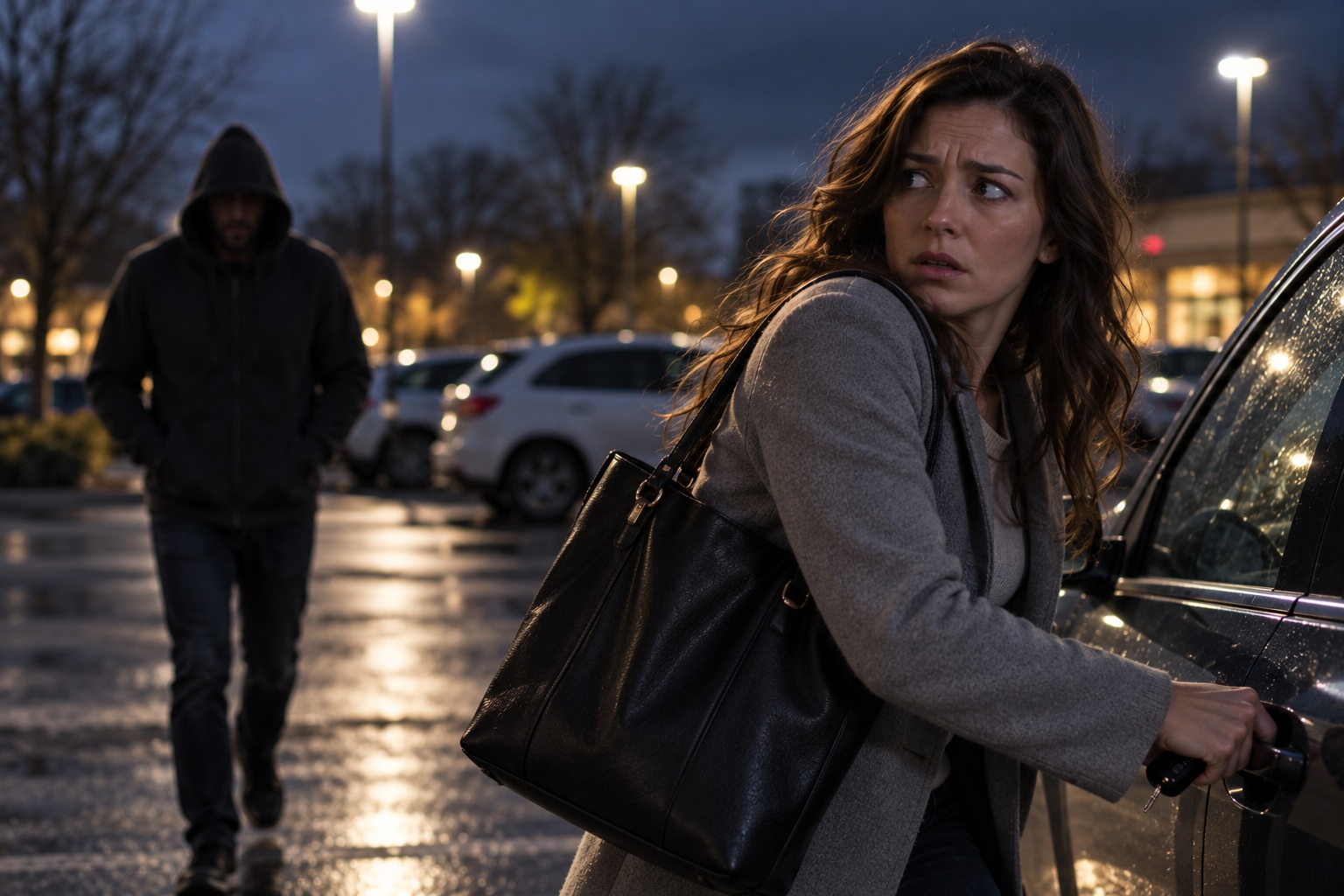
You check the parking lot before walking to your car.
You close the blinds earlier.
You stop posting pictures.
You change the route you take to work.
You wonder whether the person standing behind you at the grocery store is really a stranger.
This is part of what makes stalking so damaging.
The stalker doesn’t have to be physically standing beside someone to make that person feel watched.
What Is Stalking?
Stalking generally involves a pattern of repeated, unwanted behavior directed at a specific person that causes fear, distress, or concern for their safety or the safety of others.
It can happen between strangers, acquaintances, coworkers, family members, or people who once dated.
But stalking is also frequently connected to intimate relationships and domestic abuse.
A former partner may refuse to accept that the relationship has ended. Someone who previously controlled where their partner went, who they spoke with, or what they did may continue—or intensify—that behavior after separation.
The relationship may have ended.
The control hasn’t.
Stalking Isn’t Romance
Movies and television haven’t always done us a favor when it comes to understanding stalking.
We’re sometimes shown a character repeatedly pursuing someone who has said no until that person finally realizes:
“They really do love me.”
Real life is different.
Showing up repeatedly after someone has asked you not to isn’t romantic.
Sending dozens of messages after someone has stopped responding isn’t persistence to admire.
Following someone isn’t devotion.
Refusing to accept the end of a relationship isn’t proof of love.
When attention is unwanted and becomes persistent, frightening, intrusive, or threatening, it shouldn’t be romanticized.
“No” doesn’t mean “try harder.”
Stalking Can Be Obvious—or Surprisingly Subtle
Some stalking behaviors are easy to recognize.
Repeatedly following someone.
Showing up at their home.
Waiting outside their workplace.
Making threats.
But stalking can also involve behaviors that might appear harmless when viewed individually.
Sending unwanted gifts.
Repeatedly calling from different numbers.
Creating new social-media accounts after being blocked.
Driving past someone’s house.
Contacting their friends or relatives.
Showing up at places they regularly visit.
Leaving notes.
Repeatedly asking other people about them.
One flower delivery may look romantic to an outsider.
The victim may see something entirely different:
“I moved. How did they get my new address?”
Context matters.
Technology Has Changed Stalking
A stalker no longer needs to physically follow someone everywhere to know a great deal about their life.
Our phones, vehicles, apps, social-media accounts, photographs, fitness devices, shared accounts, and other technology can reveal enormous amounts of information.
Someone may use technology to monitor a person’s location, repeatedly contact them, access accounts without permission, impersonate them online, or track their activity.
Social media can create additional risks.
A person doesn’t necessarily have to post their location directly.
A photograph can reveal a restaurant.
A friend’s post can show where someone spent the weekend.
A familiar background can reveal a workplace.
An event announcement can tell someone where they’ll be next Saturday.
Digital stalking can make someone feel as though there is nowhere they can go without being found.
When Stalking Follows a Relationship
Stalking by a former intimate partner can be particularly frightening because the person already knows so much.
They may know where the victim works.
Where family members live.
Which grocery store they use.
Where the children attend school.
What kind of car they drive.
Their routines.
Their friends.
Their passwords or security questions.
They may even have previously had legitimate access to devices, accounts, homes, or location-sharing services.
That knowledge can make separation complicated.
It can also turn ordinary daily routines into sources of anxiety.
Imagine Never Feeling Completely Alone
One of the most damaging effects of stalking is the loss of privacy.
Your home is supposed to be where you can relax.
But what if you’re wondering whether someone is outside?
Your phone is supposed to connect you to other people.
But what if every notification makes your stomach tighten?
Your car gives you independence.
But what if you’re checking the rearview mirror to see whether someone is following?
Eventually, the victim may begin experiencing the stalker’s presence even when the stalker isn’t there.
Not because they’re imagining the danger.
Because repeated experiences have taught them to remain alert.
Hypervigilance Can Become Part of Everyday Life
Someone experiencing stalking may become intensely aware of their surroundings.
They may scan parking lots.
Check doors repeatedly.
Look behind them while walking.
Notice unfamiliar vehicles.
Sit near exits.
Avoid being alone.
Keep curtains closed.
Change routines.
Ask friends to walk them to their car.
This heightened state of alertness is often called hypervigilance.
In the short term, vigilance may be part of trying to stay safe.
But living in that state for weeks or months can be exhausting.
The mind and body rarely get the opportunity to fully relax.
The Emotional Impact Can Be Enormous
Stalking can affect far more than someone’s sense of physical safety.
A victim may experience anxiety, fear, difficulty concentrating, irritability, sleep problems, depression, or symptoms associated with trauma.
They may become socially withdrawn.
Some people begin questioning themselves.
“Am I overreacting?”
“Maybe it was just a coincidence.”
“What if nobody believes me?”
This uncertainty can be especially difficult when individual incidents seem minor to other people.
The victim isn’t reacting to one text message.
They’re reacting to the pattern and everything that message represents.
Sleep Can Become Difficult
Nighttime can be especially challenging.
A noise outside suddenly matters.
Headlights moving across the wall get your attention.
The dog barking wakes you instantly.
You wonder whether the doors are locked.
Then you check them again.
And even when nothing happens, your body may remain prepared for something to happen.
Chronic sleep disruption can make anxiety, concentration, mood, and everyday functioning even more difficult.
Stalking Can Change Someone’s Entire Routine
Think about everything you do without much consideration.
Going to the gym.
Walking the dog.
Stopping for coffee.
Driving to work.
Going out with friends.
Posting a vacation picture.
Taking an evening walk.
Now imagine reconsidering every one of those activities because you’re worried someone may be watching.
Victims may change telephone numbers, email addresses, jobs, routines, vehicles, or even where they live.
Some stop using social media.
Others stop going to places they love.
The financial costs can also add up—security systems, missed work, transportation changes, legal expenses, relocation, childcare, and other safety-related costs.
The victim may end up reorganizing their life because another person refuses to respect their boundaries.
Relationships Can Be Affected Too
Stalking doesn’t always affect only one person.
Friends and family may also receive messages or unwanted contact.
A stalker may question coworkers, relatives, or neighbors about the victim.
New romantic partners may become targets of harassment or threats.
Parents may worry about their children’s safety.
And victims sometimes withdraw from people they love because they fear bringing them into the situation.
Isolation can make an already frightening experience even harder.
Children Can Feel the Impact
When stalking involves a parent or former partner, children may also be affected.
A child may notice that the curtains are always closed.
They may wonder why someone else picks them up from school now.
They may sense a parent’s anxiety even when nobody explains what’s happening.
In some situations, children may even be used to gather information:
“Where did Mom go last night?”
“Who was Dad talking to?”
Children should never be placed in the middle of an adult’s attempt to monitor or control another person.
“Why Don’t You Just Block Them?”
Blocking someone can be useful in some situations, but stalking isn’t always solved with a button.
A stalker may create another account.
Use a different number.
Contact friends.
Show up physically.
Send mail.
Use someone else’s account.
And depending on the circumstances, a victim may also need to preserve unwanted communications as potential evidence.
That’s why generic advice isn’t always enough.
Safety planning should fit the individual situation.
A stalking or domestic-violence advocate can help someone consider options without assuming that one strategy is appropriate for everyone.
Documentation Can Matter
When it can be done safely, keeping records of unwanted contact may help establish that what is happening is a pattern rather than a collection of unrelated incidents.
That might include preserving messages, emails, voicemails, photographs, dates, times, descriptions of incidents, or information about witnesses.
But safety comes first.
If someone suspects their phone, computer, vehicle, accounts, or other devices are being monitored, changing settings or investigating suspected surveillance can sometimes alert the person responsible.
In those circumstances, seeking advice from a safer device or speaking with a knowledgeable advocate may be a better first step.
If Someone Tells You They’re Being Stalked
Take them seriously.
Don’t say:
“I’m sure it’s nothing.”
“Maybe they just want closure.”
“You must have done something to encourage them.”
And don’t turn the situation into a test of whether you personally would be frightened.
Instead, listen.
You might say:
“I believe you.”
“That sounds frightening.”
“What would help you feel safer?”
“Would you like me to help you find someone who knows how to handle stalking situations?”
Being believed can be incredibly important.
The Victim Isn’t Causing the Stalking
Someone shouldn’t have to stop living their life because another person refuses to respect a boundary.
They shouldn’t have to dress differently.
Stop seeing friends.
Delete every social-media account.
Quit their job.
Move.
Or constantly prove that their fear is justified.
Sometimes safety concerns make changes necessary, but responsibility for the stalking belongs to the person engaging in the behavior.
The victim’s normal activities aren’t the cause of the stalking.
The Impact Can Continue After the Stalking Stops
Even when unwanted contact ends, the emotional effects may not disappear immediately.
A phone notification can still trigger anxiety.
An unfamiliar car may get someone’s attention.
Being approached unexpectedly can feel frightening.
A person may continue checking locks or avoiding certain places.
Recovery can take time.
For some people, counseling or other trauma-informed support can help them rebuild a sense of safety and regain parts of their life that became associated with fear.
Everyone Deserves to Feel Safe in Their Own Life
Stalking isn’t simply annoying communication.
It isn’t someone being “too interested.”
And it isn’t romantic persistence.
It’s a pattern that can take away something most of us rarely think about until it’s gone:
The feeling that our life belongs to us.
The freedom to go home without looking over your shoulder.
To answer your phone without fear.
To walk through a parking lot without scanning every car.
To see friends without wondering who is watching.
To simply be alone and actually feel alone.
Stalking can take those ordinary freedoms away.
Recognizing the behavior, believing the person experiencing it, and helping them find appropriate support can be the beginning of getting those freedoms back.
Help Is Available
If stalking is connected to a current or former intimate relationship, the National Domestic Violence Hotline can provide confidential support at 1-800-799-SAFE (7233) or by text at START to 88788.
The Stalking Prevention, Awareness & Resource Center (SPARC) also provides information and resources about stalking and safety planning.
If someone believes they are in immediate danger, they should contact emergency services.
And if there’s concern that a phone or computer is being monitored, consider seeking help from a safer device when possible.
You don’t have to wait for stalking to become physically violent before taking it seriously. Fear, surveillance, repeated unwanted contact, and the loss of your sense of safety matter too.