

Understanding Domestic Violence: The Different Forms of Abuse and Their Impact
Understanding Domestic Violence: The Different Forms of Abuse and Their Impact
When we hear the words domestic violence, many of us immediately picture physical violence—a slap, a punch, or injuries that someone is trying to hide.
Physical abuse is certainly domestic violence.
But it is only one form.
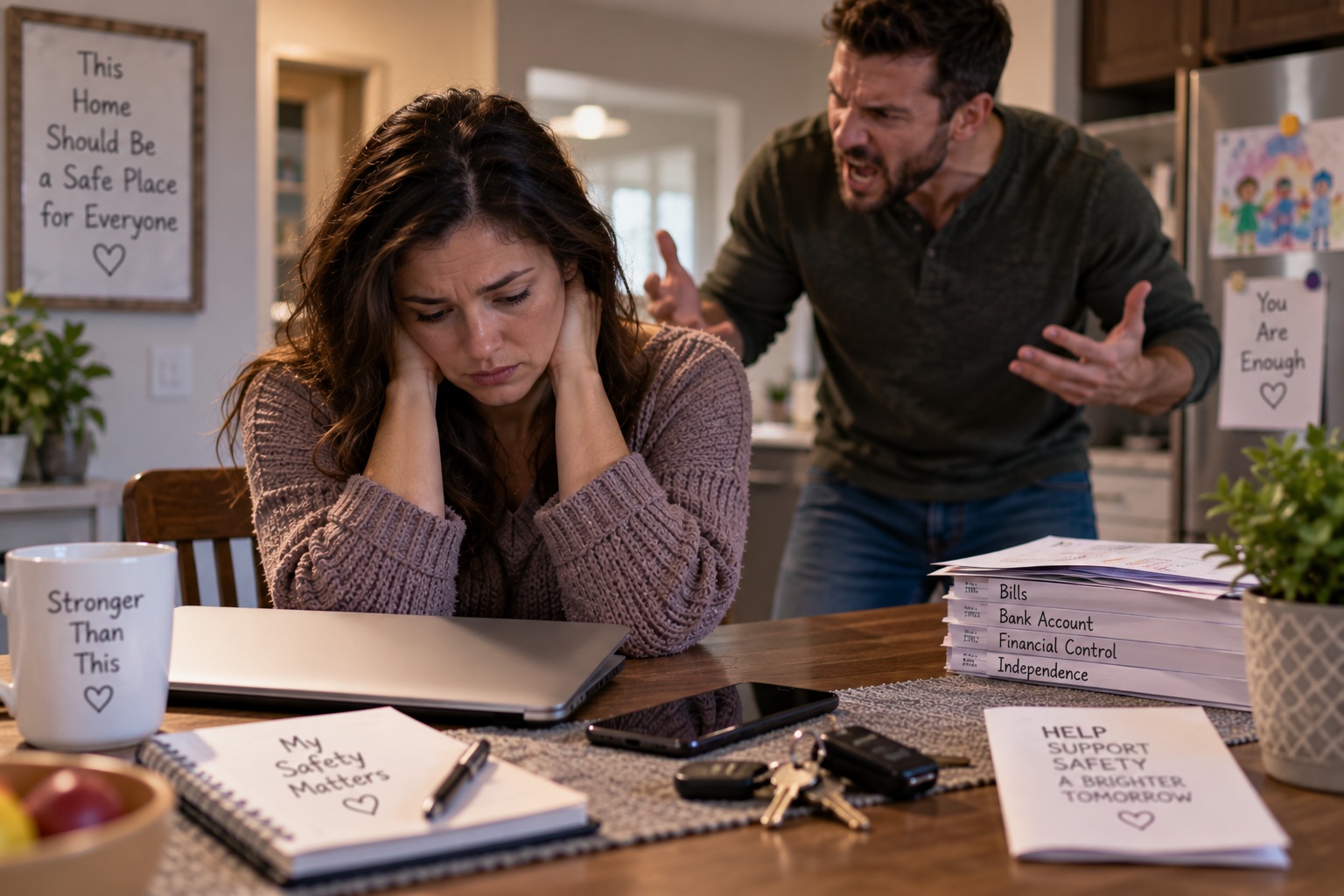
Domestic violence can also involve intimidation, humiliation, financial control, sexual coercion, threats, stalking, isolation, and the use of technology to monitor or control another person.
Sometimes there isn’t a bruise anyone can see.
And sometimes that makes it much harder for the person experiencing the abuse to recognize what is happening—or to convince themselves that it’s serious enough to ask for help.
At the center of many abusive relationships is something broader than an individual incident:
Power and control.
Domestic Violence Isn’t Always Physical
A relationship doesn’t have to involve hitting to become abusive.
Abuse can develop gradually.
At first, excessive attention may feel flattering.
“Where are you?”
“Who are you with?”
“When will you be home?”
Over time, questions can become demands.
A partner may begin deciding who the other person can see, what they can wear, where they can go, how money is spent, or when they need to check in.
Jealousy becomes surveillance.
Concern becomes control.
Arguments become intimidation.
And the person experiencing it may slowly begin changing their behavior simply to avoid another confrontation.
When someone begins organizing their life around preventing their partner’s anger, fear has become part of the relationship.
Physical Abuse
Physical abuse is probably the most widely recognized form of domestic violence.
It can include hitting, slapping, kicking, pushing, choking or strangulation, grabbing, biting, burning, restraining someone, throwing objects, or otherwise intentionally causing physical harm.
It can also include blocking a doorway so someone cannot leave, driving dangerously to frighten them, destroying property during an argument, or threatening someone with an object or weapon.
Physical abuse doesn’t have to result in a serious injury to be abuse.
And an incident doesn’t become unimportant simply because the person apologizes afterward.
In some abusive relationships, periods of violence are followed by remorse, affection, promises, or unusually loving behavior.
That can make the situation confusing.
The person being harmed may think:
“This isn’t who they really are.”
“They promised it will never happen again.”
“Maybe I caused the argument.”
But responsibility for violence belongs to the person who chooses to use it.
Emotional and Psychological Abuse
Emotional abuse can be much harder for outsiders to see.
It can involve constant criticism, humiliation, insults, intimidation, manipulation, threats, or deliberately undermining someone’s confidence.
A partner might repeatedly tell someone:
“You’re worthless.”
“Nobody else would want you.”
“You can’t do anything right.”
“You’re crazy.”
“You couldn’t survive without me.”
One cruel statement during an argument doesn’t necessarily define an abusive relationship. But a persistent pattern of degrading, frightening, manipulating, or controlling another person can be emotional abuse.
Over time, those messages can change how someone sees themselves.
A person who was once confident may begin questioning every decision.
They may apologize constantly.
They may stop trusting their own judgment.
Eventually, they may begin believing the very things their abuser has been telling them.
Gaslighting and Manipulation
One form of psychological manipulation commonly discussed in abusive relationships is gaslighting.
This happens when someone repeatedly causes another person to question their perception of what happened.
“I never said that.”
“You’re imagining things.”
“You’re too sensitive.”
“That never happened.”
“You always twist everything.”
Disagreements about memories happen in healthy relationships too. Gaslighting is different because it involves a pattern of manipulation that undermines another person’s confidence in their own perceptions.
After enough of this, someone may begin asking:
“Maybe I really am the problem.”
That self-doubt can make leaving or seeking help much more difficult.
Coercive Control
Some abusive relationships are best understood not by looking at one incident but by looking at the overall pattern.
This is often described as coercive control.
One partner gradually restricts the other’s independence.
They may determine where the person goes, whom they see, what they wear, when they sleep, whether they work, how they spend money, or how quickly they must respond to messages.
There may be rules that are never openly called rules.
The consequences of breaking them may be anger, threats, humiliation, intimidation, or violence.
From the outside, individual behaviors may sometimes look insignificant.
Together, they can create a life in which one person is constantly adjusting their behavior around another person’s control.
Financial Abuse
Money can become an extraordinarily powerful means of control.
A financially abusive partner might prevent someone from working, sabotage their employment, take their paycheck, control access to bank accounts, withhold money for basic needs, or demand an accounting of every dollar spent.
They may secretly create debt in the other person’s name or damage their credit.
Sometimes the person experiencing the abuse has no idea how much money the household has or how to access it.
This creates more than financial hardship.
It can create dependence.
Someone may desperately want to leave but wonder:
Where will I live?
How will I buy food?
How will I support my children?
What if I don’t have access to our bank account?
That is why telling someone to “just leave” can dramatically underestimate the reality they are facing.
Sexual Abuse
Being married, dating, or living together does not eliminate a person’s right to consent.
Sexual abuse within a relationship can include forcing or pressuring someone into sexual activity, ignoring a refusal, using threats or intimidation to obtain sex, or engaging in sexual activity when someone cannot consent.
Coercion doesn’t always involve physical force.
Someone may comply because they are frightened of what will happen if they refuse.
Consent should be freely given. A relationship does not create permanent consent.
Sexual abuse by an intimate partner can have profound emotional consequences because the harm is being inflicted by someone the person is supposed to be able to trust.
Isolation
Isolation can happen so gradually that someone doesn’t immediately recognize it.
A partner may initially complain about one particular friend.
Then another.
Family members become “a bad influence.”
Going out causes arguments.
Phone calls create suspicion.
Eventually, maintaining friendships becomes so exhausting that the person stops trying.
Sometimes an abusive partner deliberately creates conflicts between the victim and the people closest to them.
Why?
Because isolation removes support.
A person who feels completely alone can be much easier to control.
Digital and Technology-Facilitated Abuse
Technology has created new ways for abusive behavior to enter someone’s life.
A partner may demand passwords, repeatedly check someone’s phone, monitor social media, track their location, read private messages, or insist on constant communication.
Technology can also be used for harassment, impersonation, threats, or unwanted surveillance.
The controlling behavior may be disguised as affection:
“If you don’t have anything to hide, why won’t you give me your password?”
But privacy and secrecy aren’t the same thing.
Being in a relationship doesn’t mean surrendering every boundary.
Stalking and Harassment
Stalking can occur during a relationship, but it may become especially noticeable after someone tries to leave.
Repeated unwanted calls.
Showing up unexpectedly.
Following someone.
Monitoring their workplace.
Sending excessive messages.
Contacting friends and family to find them.
Watching their social media activity.
Behavior that might seem romantic in a movie can be frightening when it is unwanted and persistent in real life.
If someone has clearly said they don’t want contact, repeatedly pursuing them isn’t proof of love.
It can be a form of intimidation and control.
Using Children as a Form of Control
When children are involved, abuse can become even more complicated.
An abusive partner may threaten to take the children away, tell them negative things about the other parent, use visitation or custody issues as leverage, or make the children carry messages between adults.
Someone may also threaten to harm the children—or themselves—if their partner leaves.
Children don’t have to be physically attacked to be affected by domestic violence.
Living in an environment of fear, intimidation, threats, or violence can have a significant emotional impact on a child.
What Does Domestic Violence Do to a Person?
The effects can reach far beyond the individual abusive incident.
Someone living with abuse may become constantly alert to changes in their partner’s mood.
What kind of mood are they in?
Did I say something wrong?
Should I mention this now or wait?
Is it safe to disagree?
That constant vigilance can be exhausting.
People experiencing domestic violence may struggle with anxiety, depression, sleep difficulties, concentration, fear, shame, isolation, or symptoms associated with trauma.
Physical violence can cause injuries and long-term health consequences.
Financial abuse can affect housing, employment, credit, and economic stability for years.
And psychological abuse can leave someone questioning their worth long after the relationship has ended.
Why Doesn’t Someone Just Leave?
This may be one of the most common—and least helpful—questions asked about domestic violence.
Leaving can be complicated and, in some circumstances, dangerous.
Someone may fear retaliation.
They may have children.
They may have nowhere to go.
They may depend financially on their partner.
They may worry that nobody will believe them.
They may still love the person.
They may hope things will change.
They may have been isolated from everyone who could help.
Or they may be frightened about what will happen when the abusive partner realizes they are losing control.
Instead of asking:
“Why don’t you leave?”
a more helpful question might be:
“How can I help you be safer?”
If Someone Tells You They’re Being Abused
Listen.
You don’t need to investigate the situation or make every decision for them.
Believe what they’re telling you. Avoid blaming them. Don’t pressure them into taking an action they aren’t prepared to take unless there is an immediate safety emergency requiring intervention.
You can say:
“I believe you.”
“You don’t deserve to be treated this way.”
“I’m here if you need me.”
“How can I help?”
Those words may matter more than you realize.
Professional domestic-violence advocates can also help someone think through options and develop an individualized safety plan.
Abuse Doesn’t Have to Leave a Bruise to Be Real
Domestic violence can be physical.
It can also be emotional, psychological, sexual, financial, digital, or a pattern of coercive control.
Often, several forms occur together.
The common thread is not simply conflict.
Healthy couples disagree. They become frustrated. They make mistakes and sometimes say things they regret.
Abuse is different because fear, intimidation, coercion, violence, or control becomes part of the relationship.
Recognizing that difference matters.
Because sometimes the first step toward getting help isn’t leaving.
Sometimes the first step is simply being able to say:
“What is happening to me isn’t okay.”
And having someone believe you.
Help Is Available
If you or someone you know is experiencing domestic violence, confidential support is available through the National Domestic Violence Hotline at 1-800-799-SAFE (7233) or by texting START to 88788.
If someone is in immediate danger, contact emergency services.
Seeking information doesn’t obligate someone to make a particular decision. It can simply be the beginning of understanding the options available and finding a safer path forward.